

Grades show colleges how a student learns. Extracurriculars show them who the student is, including what they care about, how they spend their time, and how they grow when nobody is grading them.
That’s why families ask me every year which activities look best. My honest answer is that no single activity impresses every college. Admissions readers look for depth, growing responsibility, and real interest, described specifically on the Activities List. So the real question is how your teen can choose activities that will produce those things.
1. Start with what your teen already loves
Ask your teen what they do when nobody makes them. Draw, build, argue, cook, code, play, organize, help? Those instincts point to the activities they’re most likely to stick with for years, and staying power is what turns an activity into a strong Activities List entry.
If your teen is still exploring, that’s fine, especially in 9th grade. Trying a few things and keeping the ones that click is exactly how it should work.
2. Know the main types of activities
No category is better than another. Each one can be a standout on an application when the student commits to it.
Academic competitions
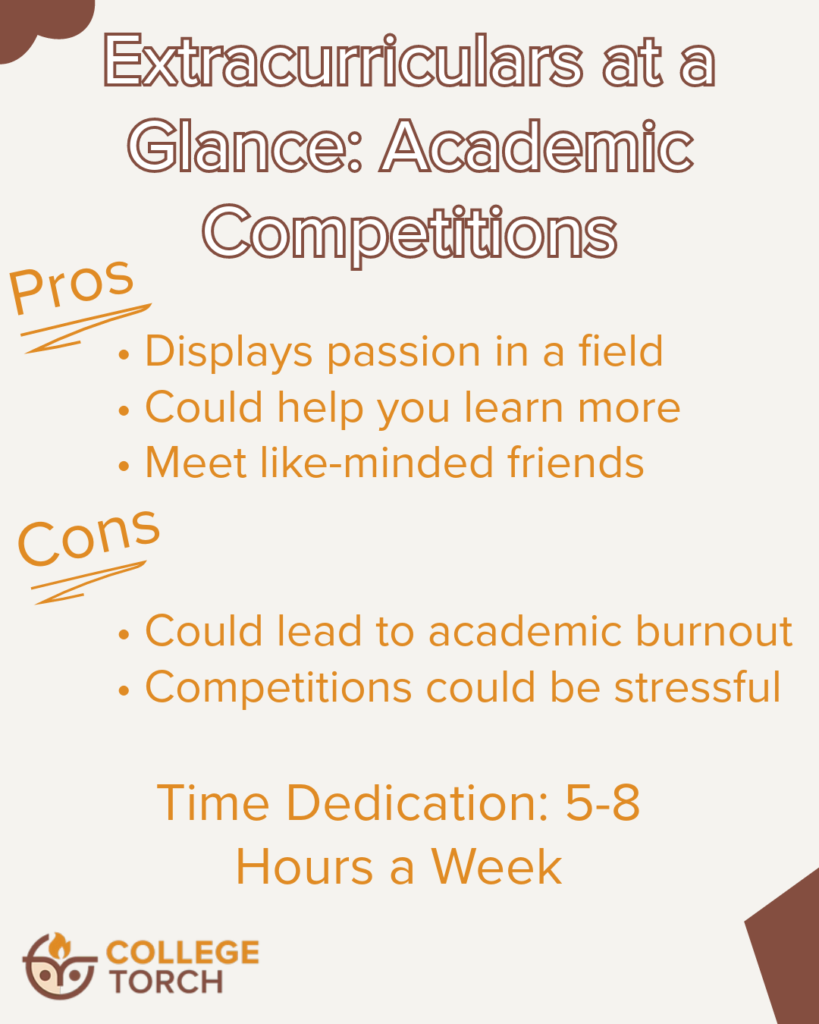
Mock Trial, Science Olympiad, math competitions, debate, and similar teams. They take real practice time and reward students who love the subject. If your teen is only joining because it sounds impressive, the practices will get old fast.
Sports
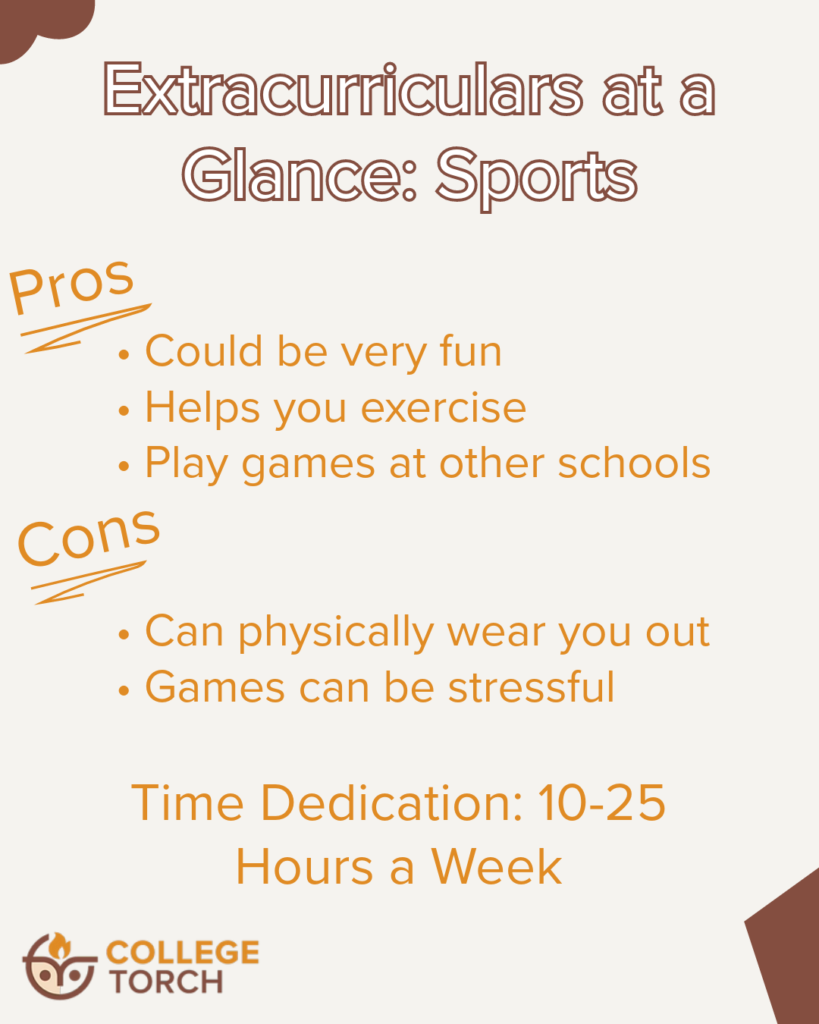
Team and individual sports teach discipline, resilience, and teamwork, and they’re a major time commitment. Varsity, club, and intramural all count. Colleges don’t expect every student to play a sport, but a student who loves one should keep at it.
Arts
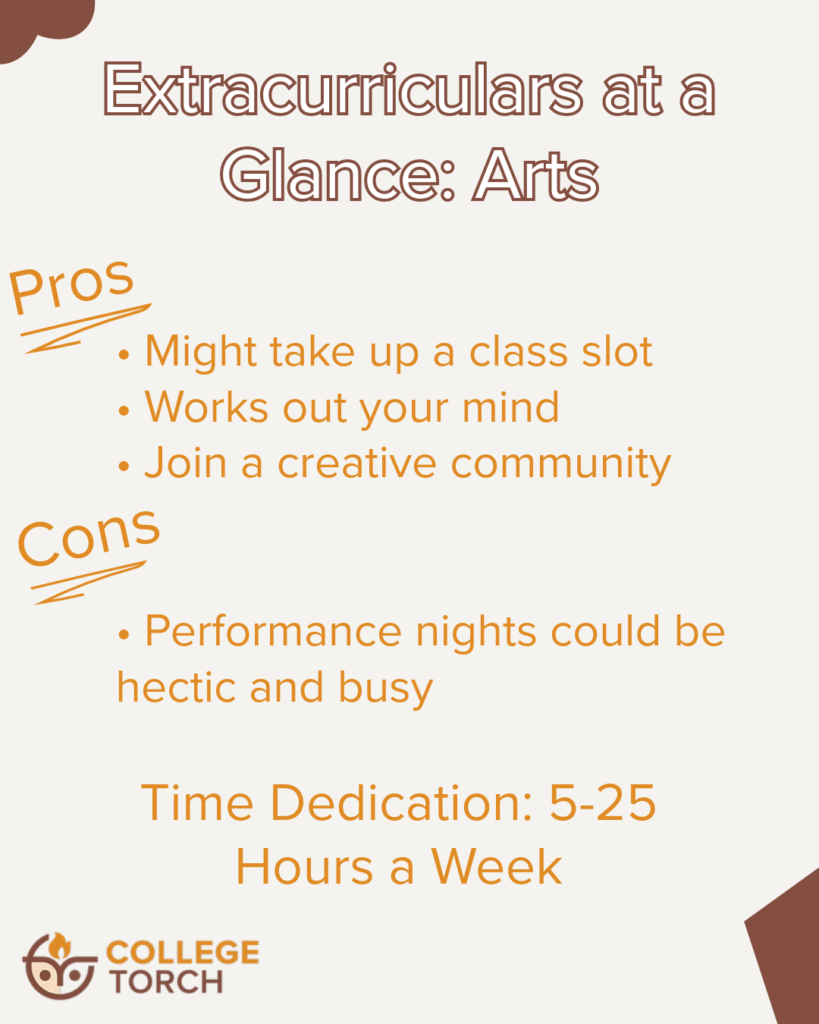
Visual art, theater, music, dance, film, writing. Arts activities show creativity and long-term practice. Students who are serious can also submit a portfolio or arts supplement at many colleges.
Volunteering and community service
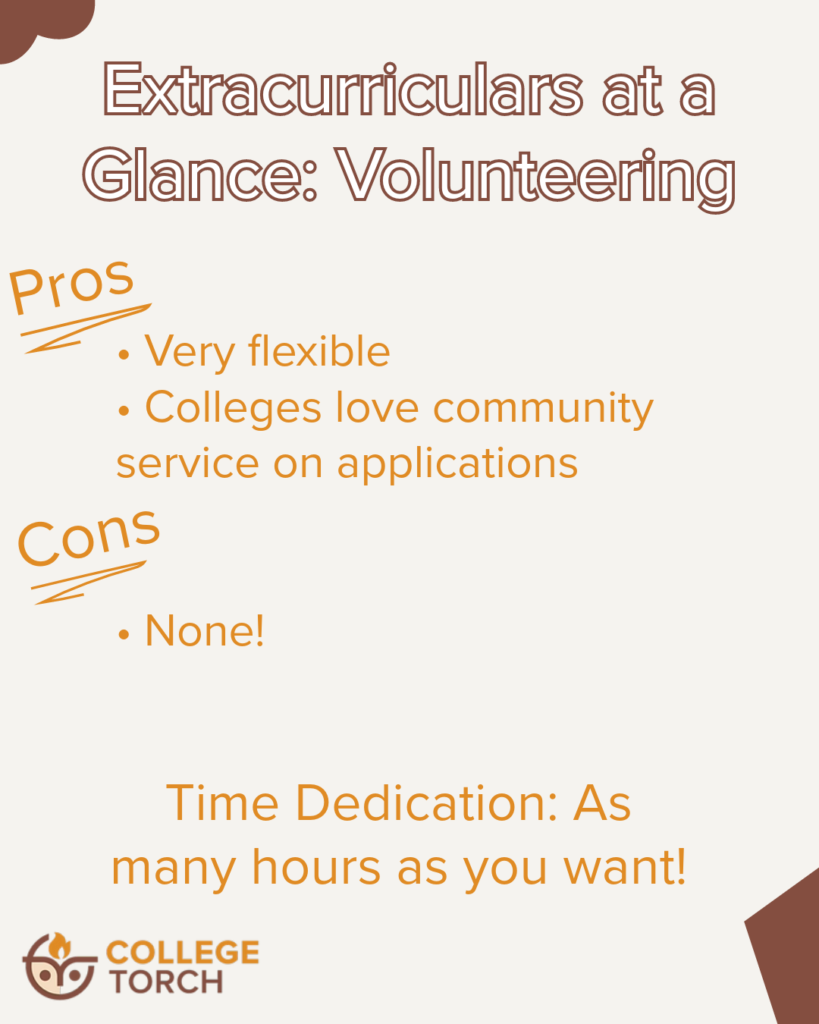
Service matters most when it’s sustained and connected to something your teen cares about. One organization over several years, with growing responsibility, says far more than a scattering of one-time events. I go deeper in What Colleges Really Look for in High School Volunteering.
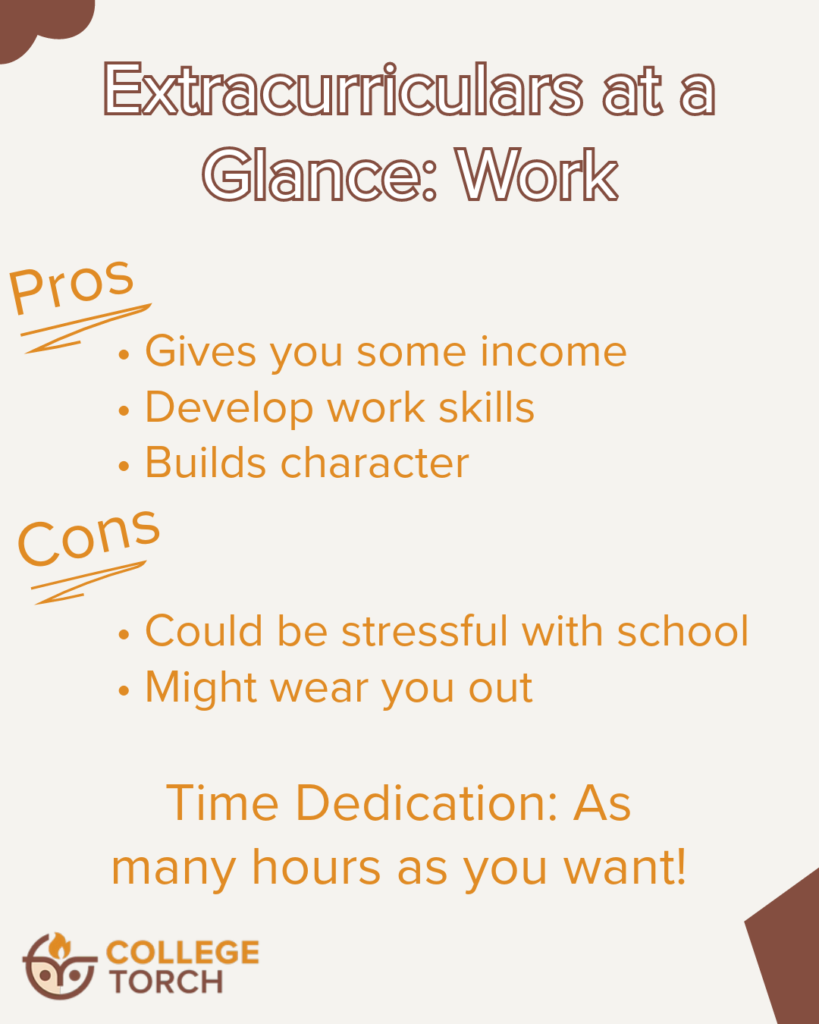
Work and family responsibilities
A part-time job, a small business, or caring for siblings shows maturity and responsibility, and colleges value it as much as any club. Students who work often undersell it, so make sure it goes on the Activities List. More in Do Jobs Help Your College Application?
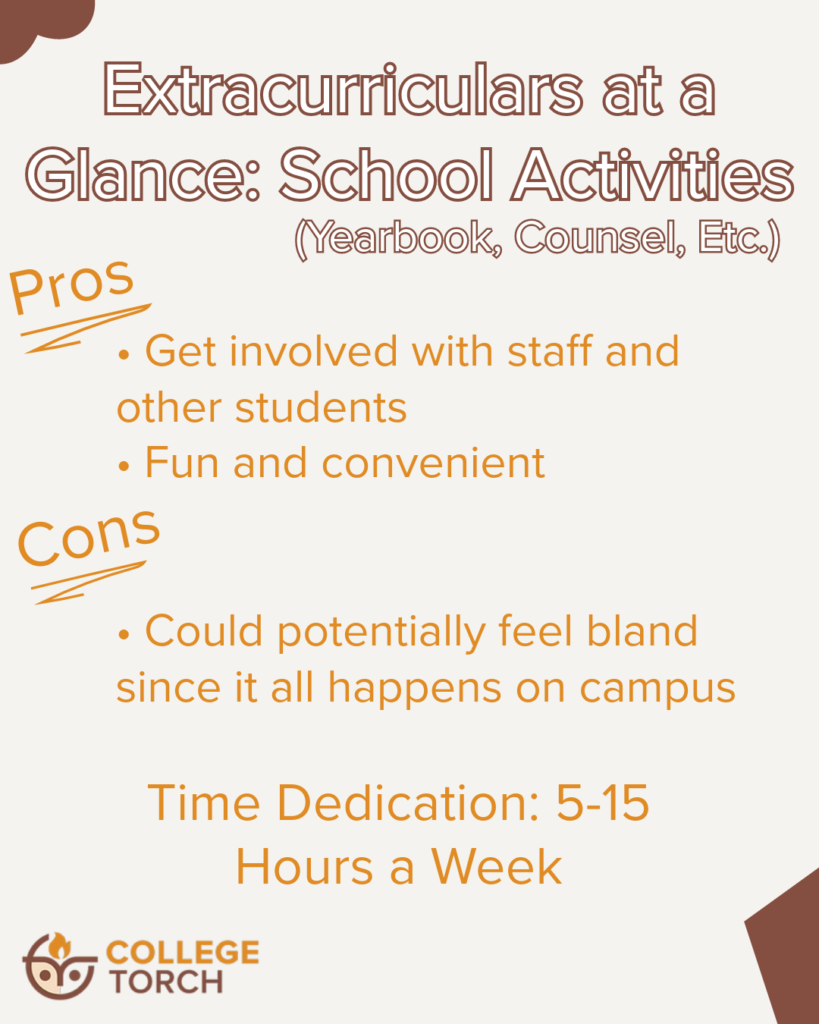
School clubs and student leadership
Student government, yearbook, the school newspaper, peer tutoring, affinity clubs like a GSA. These are convenient because they happen on campus, and they often offer the clearest path to leadership roles over time.
Self-directed projects
An app, a blog, a YouTube channel, a research project, a community initiative your teen started. These don’t need a school sponsor to count, and they can be some of the most memorable entries on an application.
3. Follow the interest first
If your teen already knows they love computer science or biology, an activity in that area can strengthen an application to that major. It doesn’t have to be a straight line, though. A future engineer who plays in the jazz band is still a strong applicant, and most teens change their minds about majors anyway.
4. Go deep with a few
By 10th or 11th grade, encourage your teen to narrow down to a few activities they can commit to and grow in. Three activities with years of involvement and increasing responsibility will read far better than ten clubs your teen attended a few times. Leadership doesn’t have to mean a title, either. Training new members, running a project, or solving a problem nobody else would tackle all count.
5. Protect the balance
Grades still come first, and so do sleep and mental health. An overloaded schedule usually means lower grades and thinner involvement everywhere. These habits help.
- Map out a typical week before saying yes to something new.
- Look ahead at busy seasons (finals, AP exams, competition season) and plan around them.
- Give your teen permission to quit something that no longer fits. Leaving one activity to go deeper in another is a smart choice.
6. Keep a record as you go
The strongest Activities List descriptions are full of specifics, like numbers, results, and moments of growth. By senior year, most students have forgotten those details. A simple running log, updated a few times a semester, keeps them.
Free Download for 9th to 11th Graders
The High School Activity Tracker
A simple template for your teen to record each activity, the hours, and what happened along the way, so writing the Activities List senior year is easy.
Get the Activity Tracker →Free. I’ll send it straight to your inbox.
Junior or senior?
If applications are close, start with my free Activities Field Guide → It helps your teen find everything that belongs on their Activities List.
Robert Powers
Founder, College Torch
Robert Powers is the founder of College Torch, a college counseling practice in Sierra Madre, California, that works with families nationwide. In 10+ years he has guided 300+ students, and 90% go to one of their top three college choices. He holds two degrees from Johns Hopkins, is a Professional Member of IECA, and co-authored a chapter in NACAC’s textbook for college counselors.
IECANACACHECAWACACM.A. Johns Hopkins
Book a free Right-Fit Call | Meet Robert | Parent group on Facebook