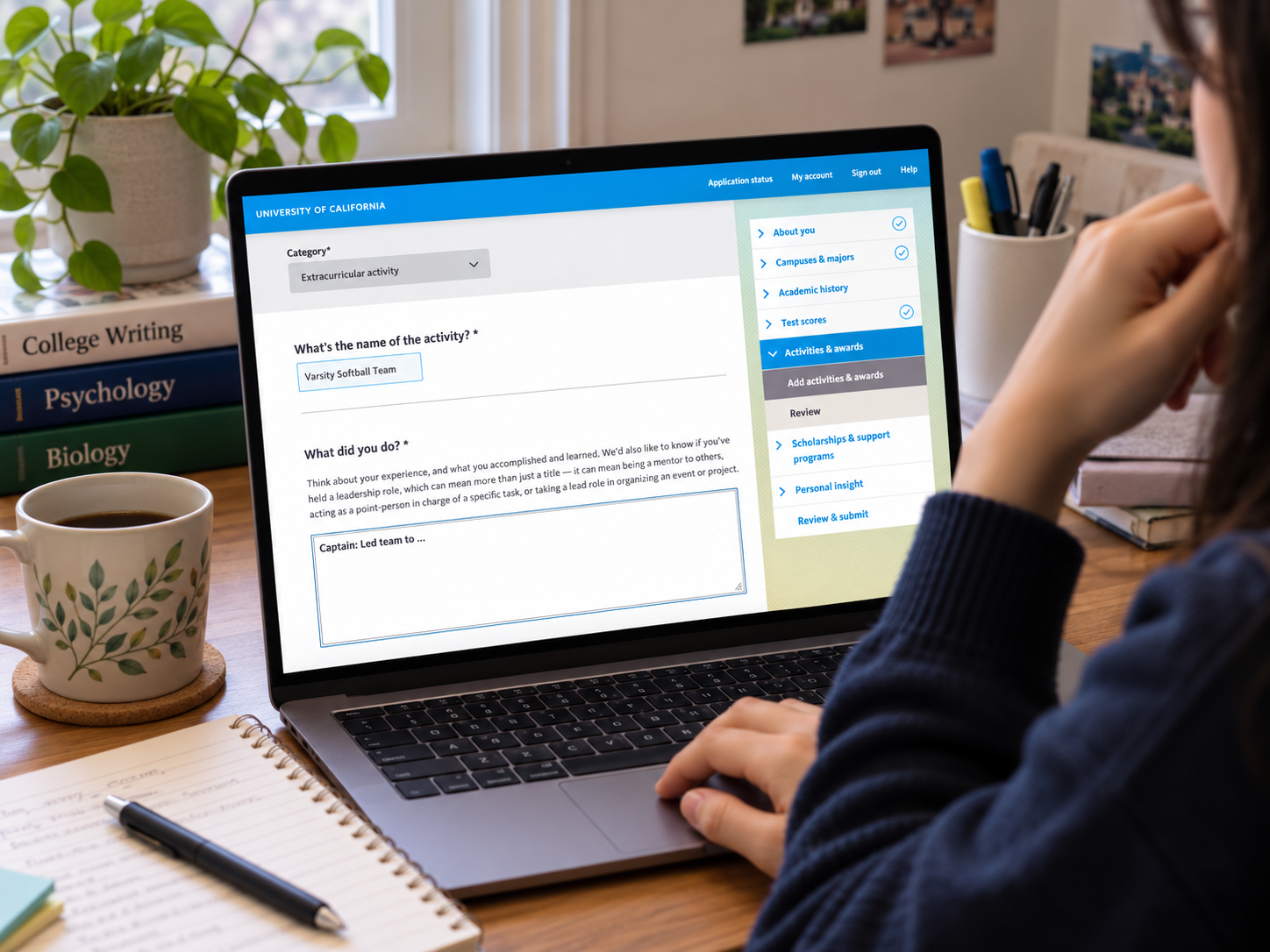

Students ask me all the time whether their job “counts.” They’re usually comparing a shift at a grocery store to a classmate’s research internship and assuming they lose.
They don’t. A paid job can impress an admissions reader as much as any club, sometimes more. Here’s why, and how to make sure yours gets the credit it deserves.
What admissions readers see in a job
A job tells a college things a club often can’t:
- Responsibility. Someone is counting on you to show up, on time, every shift.
- Maturity. You deal with adults, customers, and problems that don’t have a teacher standing by.
- Time management. You kept your grades up while working 10 or 15 hours a week.
- Trust and growth. A raise, a promotion, or a set of keys to the store shows that your employer saw something in you.
- Context. If you work to help your family, colleges want to know. It explains your time and shows what you’re carrying.
Jobs that tell a strong story
Any job can work. Some make it especially easy to show growth:
- Customer-facing jobs (retail, restaurants, front desks) build patience and people skills, and they often lead to training new hires or leading a shift.
- Responsibility-for-others jobs (lifeguard, camp counselor, babysitter) show you can be trusted with someone’s safety.
- Teaching jobs (tutor, music teacher, coding instructor) show mastery, because you can explain it to someone else.
- Field-related jobs (vet clinic assistant, lab helper, IT support) connect to an intended major.
- Self-starter jobs (a lawn care business, freelance photography, an online shop) show initiative and creativity.
Want specific ideas? I share my favorites in These 6 part-time jobs look the best on a college application, and how to land one in Hey teens, want a part-time job? Here’s where to start.
Family responsibilities count, too
Watching younger siblings every afternoon, translating for a grandparent, or working in a family business all belong on your application. Colleges know that not every student has free time for clubs, and they want to understand how you actually spend your hours.
How to describe a job on the Activities List
The difference between a forgettable entry and a strong one is specifics. Start with a verb, use numbers, and show what changed over time.
Before
Cashier. Helped customers and worked the register.
After
Serve 150+ customers per shift; trained 4 new hires; promoted to close the store and handle nightly cash deposits.
Same job, completely different impression. The Common App gives you 150 characters for each description. The UC Application gives you 350 and has a whole Work Experience category, so use the extra room. (More in my complete guide to the UC Application activities section.)
Keep the balance
A job should add to your story, not crowd out your grades. For most students, 8 to 15 hours a week during the school year is sustainable. Summers are the perfect time to work more.
So take pride in your work. Whether you’re bagging groceries or running your own business, the skills are real, and colleges know it.
Free Download for 9th to 11th Graders
Log your hours now, thank yourself later
My free High School Activity Tracker helps you record your jobs, roles, hours, and accomplishments as they happen, so you have every number you need when it’s time to apply.
Send Me the Free Tracker →Free. I’ll send it straight to your inbox.
Robert Powers
Founder, College Torch
Robert Powers is the founder of College Torch, a college counseling practice in Sierra Madre, California, that works with families nationwide. In 10+ years he has guided 300+ students, and 90% go to one of their top three college choices. He holds two degrees from Johns Hopkins, is a Professional Member of IECA, and co-authored a chapter in NACAC’s textbook for college counselors.
IECANACACHECAWACACM.A. Johns Hopkins
Book a free Right-Fit Call | Meet Robert | Parent group on Facebook